
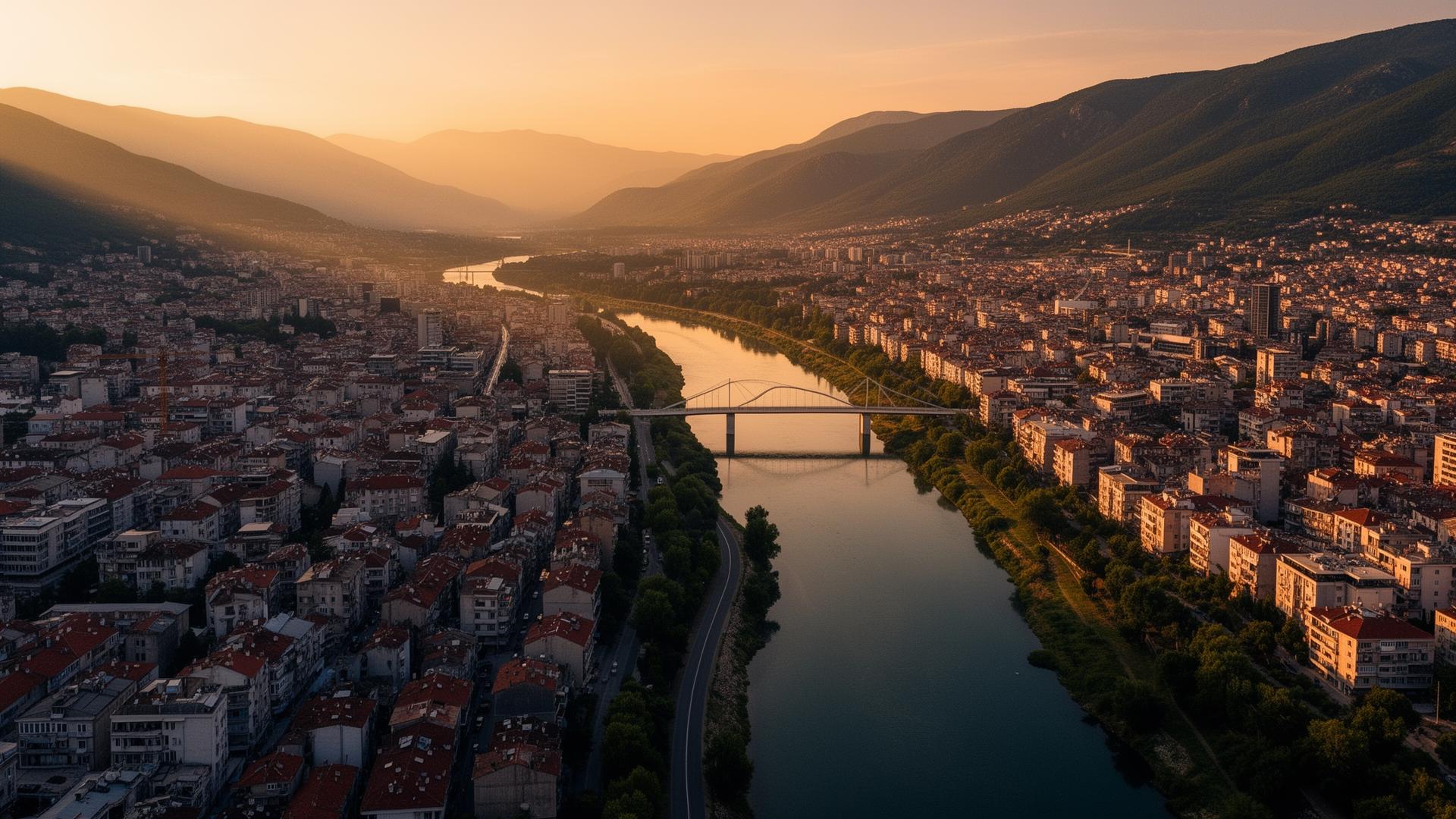
Why Podgorica works for remote workers
Podgorica is not the kind of city that markets itself to digital nomads. There are no influencer beach hostels, no "nomad villages", no daily coworking events. What it offers instead is rarer and, for many remote workers, more useful: a small, quiet European capital where life is affordable, the internet is fast, the café culture is built around long stays, and the rest of Montenegro — Lake Skadar, the Adriatic coast, the mountains — is within an hour or two.
It is a lived-in city. People work, drink coffee for hours, eat long lunches, and walk the river in the evening. You can settle in, get into a rhythm, and disappear into focused work for a week without anyone noticing — and without spending what you would in Lisbon, Tbilisi or Belgrade. The trade-off is that it is not a hub: the coworking scene is small, the nightlife is modest, and you will not bump into another remote worker every five minutes. For people who value calm and value-for-money over scene, that trade-off is the whole point.
This guide covers what you actually need: where to stay, where to work from, what internet and SIM setup to bring, realistic costs, transport, lifestyle, day trips, and the small mistakes most newcomers make.
01 · Best areas to stay
Where to base yourself for remote work.
City centre / Nova Varoš
The default choice. Walkable grid of tree-lined avenues, the highest density of cafés, restaurants and supermarkets, and easy taxi pickups. Best for first-time stays of one to four weeks.
Stara Varoš
The historic Ottoman quarter. More atmospheric, narrower streets, quieter at night. A few good apartments — better for short stays or for people who already know the city.
Near the Morača river
Quieter streets, fast access to the riverside promenade for morning walks and runs. A calmer alternative to the centre, still walkable to everything in 10–15 minutes.
Near Gorica Park
The greenest area. Forested hill with trails directly behind your door — ideal for long stays where you want a real break from the screen at the end of the day.
Airport-side / short stays
Useful for 1–2 night stops around flights. Otherwise it is too disconnected from where life actually happens; not recommended for working stays.
02 · Best cafés to work from
Café work in Podgorica — how it really works.
Café culture in Podgorica is built around long stays. Locals routinely sit two to three hours over a single coffee, and nobody will rush you. That makes the city unusually well-suited to working from cafés — but only if you respect the local rhythm.
The richest concentration of café terraces is around Njegoševa, Hercegovačka and the side streets of the city centre. Walk the area between the Republic Square and the Vektra building and you will find a dozen options on any given block. Look for places with covered or shaded outdoor seating, visible power sockets indoors, and a calm atmosphere mid-morning.
What to expect on Wi-Fi. Most central cafés offer free Wi-Fi; ask for the password politely. Speeds vary — fine for email, browsing and Slack, less reliable for long video calls. For anything important, tether to your phone or eSIM instead. Always test before a meeting.
Laptop etiquette. One coffee per hour is the unwritten rule. Add a juice or sparkling water if you stay through the lunch rush. Avoid taking calls on speaker — locals consider this rude. Wear headphones, keep your voice low, and step outside for longer calls.
When to avoid. Lunch (13:00–15:00) and the after-work hour (18:00–20:00) are the busiest. Mid-morning (09:30–12:00) and mid-afternoon (15:30–17:30) are the sweet spots for a quiet table. Sunday late mornings can also be very pleasant, with a slower, family rhythm.
We deliberately do not publish a "top 5 cafés" list — the scene rotates fast and the right café for you depends on your block. Walk Njegoševa, Hercegovačka and the centre, pick the one with the right vibe, and make it yours.
03 · Coworking and work setup
When to use coworking vs a café.
Coworking in Podgorica exists but is modest in scale — a handful of small spaces, mostly used by local startups and freelancers rather than international nomads. For a typical week of focused work, most remote workers in Podgorica alternate between their apartment and cafés, and use coworking on demand for specific needs.
Use coworking when you have several back-to-back video calls, you need a printer or scanner, you want a real desk and external monitor, or you want to meet other professionals. Use a café when you have a few hours of solo, quiet work and want a change of scene.
Working from your apartment. For long stays, this is usually the best primary setup. Filter listings for fixed broadband (most central apartments have 100–300 Mbps), a dedicated desk, good natural light and quiet windows. Bring or buy a small external keyboard, mouse and a portable laptop stand — they pay for themselves in a week.
Calls and connectivity. Treat your eSIM as the primary backup. If your apartment Wi-Fi drops mid-call, you can hotspot from your phone within seconds. Power plugs are European Type F (Schuko), 230 V, 50 Hz — the same as most of continental Europe.
04 · Internet, SIM and eSIM
Connectivity setup before and after arrival.
For a remote worker, mobile data is not optional in Montenegro — it is your second internet connection. The most practical setup is to install an eSIM before your flight, activate it on landing, and keep it as a permanent backup throughout your stay. You skip the airport queue, you have data for taxi and maps the moment you land, and you can hotspot from minute one.
Local prepaid SIMs from Montenegrin operators are also an option, sold in shops in the centre — useful if you plan to stay longer than a month and want a local number. For most digital nomads, an eSIM covers everything you need.
Beyond data, the small toolkit that makes Podgorica easy: WhatsApp (every business uses it), Google Maps (works well, including transit), a translation app (Montenegrin keyboard support is fine), and a taxi app or saved numbers for one or two reliable taxi companies.
05 · Cost of living
What a month in Podgorica really costs.
Ranges, not promises. Your actual spend depends on apartment choice, eating-out frequency and day trips. Most remote workers find they spend 30–50% less here than in Western European capitals.
06 · Transport and airport
Getting around Podgorica without stress.
The historic centre is genuinely walkable — most things you will use day-to-day are within a 25-minute walk of each other. Beyond that, taxis are the default and they are cheap: €2–€4 for almost any ride within the centre.
Always call a known taxi company or use a local app rather than hailing on the street; this is where most price disputes happen. The airport is 11 km out, a fixed 15–20 minute drive, and a pre-booked transfer or a metered taxi both work well — €10–€15 is the normal range.
Car rental only makes sense for day trips. Within Podgorica, parking, traffic and the cost of a rental day rarely beat a few taxi rides. Public buses exist but are not visitor-friendly: limited information in English, irregular schedules, and not really faster than walking for short distances.
07 · Lifestyle and local rhythm
The week of a remote worker in Podgorica.
The day starts slowly. Cafés open early but fill up around 09:00 with people on their first coffee — often a long one, never to-go. Mid-morning to noon is the most productive window for café work. Lunch is the main meal of the day, and traditional places get genuinely busy between 13:00 and 15:00.
The afternoon is quieter. By 18:00, people are out again — the riverside promenade between Blažo Jovanović Bridge and the Millennium Bridge is the unofficial evening walk, the local šetnja. Dinner is later than in northern Europe, often 20:00–22:00, and rarely rushed.
Safety is one of the city's quiet strengths. Walking home at midnight from a restaurant in the centre is normal and uneventful. Summer heat is the real challenge: July and August routinely hit 36–38°C. The local solution is simple — work in the cool morning and late evening, take a long lunch, and treat the middle of the day as time off.
Weekends are made for the rest of Montenegro. Most nomads here build their week around one or two day trips.
08 · Pros and cons
The honest balance sheet.
Pros
- Affordable for a European capital — 30–50% cheaper than the West.
- Calm and walkable; very little of the noise of bigger cities.
- Authentic, lived-in feel — not a tourist bubble.
- Lake Skadar, the coast and the mountains all within 30–120 minutes.
- One of the best home bases in the Balkans for exploring Montenegro.
- Very safe, even at night.
Cons
- Not a startup hub — limited networking and events.
- Coworking scene is small compared with bigger EU capitals.
- Summer heat (July–August) is intense.
- Nightlife is modest; this is not Belgrade or Lisbon.
- Public transport is not very visitor-friendly.
- English is common in hospitality, less so in small shops.
09 · Best day trips for remote workers
Use the weekend properly.
Lake Skadar
35 minutes south. The largest lake in the Balkans, boat tours from Virpazar, water lilies in May–June. The classic Saturday.
Niagara Falls (Cijevna)
15 minutes east. Perfect short escape — riverside lunch with your feet almost in the water.
Bar & the coast
55 minutes by car or a scenic train. Old Bar fortress, sea air, a swim if it is warm.
Kotor
Around 90 minutes. Doable as a long day, but stay overnight if you can.
Ostrog Monastery
About 90 minutes north. Carved into a vertical cliff; one of the most striking sights in the country.
Kolašin & Biogradska Gora
Two hours north for forest, lakes and cool mountain air — the antidote to summer heat.
10 · Common mistakes
What most digital nomads get wrong here.
- Choosing accommodation too far from the centre. Saving €100/month on rent and losing 40 minutes of taxi time daily is a bad trade.
- Relying only on public buses. They are not built for a visitor's schedule — taxis are cheap, use them.
- No backup mobile data. One dropped Wi-Fi during a call is enough to convince you. Install the eSIM before you arrive.
- Expecting a Lisbon or Bali nomad scene. Podgorica is quieter and more local. Calibrate your expectations and you will love it; arrive expecting a hub and you will be disappointed.
- Underestimating summer heat. Plan around it, not against it. Work mornings, rest at midday, restart at dusk.
- Not carrying small cash. Cards work in most restaurants and hotels, but markets, small bakeries and some taxis prefer €5–€20 in small bills.
11 · 7-day remote work base
A practical first week in Podgorica.
Day 1 — Arrival and setup. Land, taxi to your apartment, install the eSIM, test the Wi-Fi, do a slow sunset walk along the Morača. Light dinner in the centre.
Day 2 — Working day, café day. Two productive blocks from a café in Njegoševa or Hercegovačka, one long lunch break, evening walk on the riverside.
Day 3 — Old town walk. Work morning from your apartment, then explore Stara Varoš in the late afternoon. Dinner at Pod Volat for the classic Montenegrin grill.
Day 4 — Market morning. Saturday is for Gintaš market. Cheese, honey, fresh fruit and small bread loaves for the week. Afternoon for slow work or admin.
Day 5 — Day trip. Lake Skadar or Niagara Falls. Treat the day as fully off; you will work better all of next week.
Day 6 — Local food night. Light work, a long Sunday lunch, then a proper Montenegrin dinner with Vranac wine.
Day 7 — Recovery and admin. Catch up on inbox, plan the next week, swap the apartment if needed, and book one extension day if you are not ready to leave — most people aren't.
12 · FAQ
Frequently asked questions.
Is Podgorica good for digital nomads?+
Yes — if you want a calm, affordable European capital with fast internet, café culture, easy airport access and nature within 30 minutes. It is not a Lisbon or Bali style nomad scene; it is quieter, more local, and better for focused work than for networking.
Is Podgorica affordable for remote workers?+
Very. A comfortable monthly budget, including a central one-bedroom rental, daily coffees, eating out a few times a week and occasional taxis, typically lands between €1,100 and €1,800 per person — well below most Western European capitals.
Where should digital nomads stay in Podgorica?+
The city centre (Nova Varoš) is the easiest base — walkable, full of cafés, close to the river. Stara Varoš is more atmospheric. Areas around Gorica Park suit longer stays in quieter streets.
Are cafés laptop friendly in Podgorica?+
Generally yes, especially mid-morning and early afternoon. Long coffee stays are normal here. Avoid peak lunch (13:00–15:00) if you need a quiet table for calls.
Do I need a car in Podgorica?+
Not for daily life — the centre is walkable and taxis are cheap. A car only makes sense for day trips to Lake Skadar, Niagara Falls, Kotor or Ostrog.
Is Podgorica safe?+
Yes. Petty crime is rare and the city centre is comfortable to walk at night. Standard travel awareness is enough.
Is internet good in Podgorica?+
Fixed broadband in central apartments is reliable, often 100–300 Mbps. Mobile 4G/5G coverage in the city is strong. Always have a backup eSIM for video calls.
What is the best season for digital nomads in Podgorica?+
Late April to mid-June and September to mid-October are ideal — warm, long days, comfortable for working and exploring. July and August are very hot (often 35–38°C).
Can I use Podgorica as a base for Montenegro?+
Yes. From Podgorica you can reach Lake Skadar in 35 minutes, Bar in under an hour, Kotor in roughly 90 minutes, and the northern mountains in two hours — making it one of the best home bases in the country.
Lytheron ecosystem
Plan your next base with VistoNomadi Global.
If you are comparing Montenegro with other Mediterranean or Balkan destinations, VistoNomadi Global by Lytheron helps remote workers, freelancers and digital nomads explore countries, cities and possible relocation bases through structured guides, comparisons and AI-assisted recommendation tools.
VistoNomadi provides informational and educational content only. It is not legal, tax, immigration or financial advice. Always verify current requirements with official sources and qualified professionals.
13 · Continue exploring