
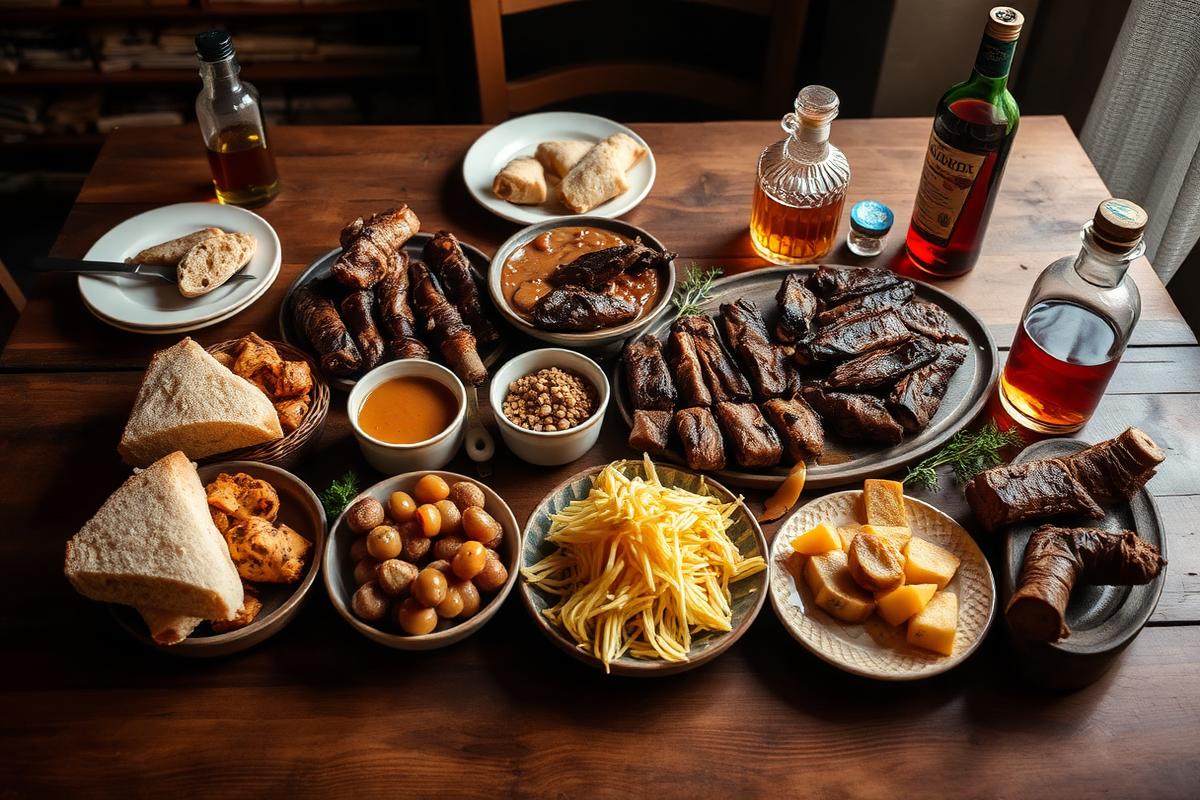
How food fits into life in Podgorica
Podgorica is a city you understand through small daily rituals. A morning coffee that lasts an hour. A long lunch at 14:00 when the streets empty for an hour. A late dinner on a terrace that drifts well past 22:00. The food scene here is not built around fine dining or chef-driven concepts — it is built around traditional cooking, generous portions and a strong local identity. Once you accept that framing, eating in Podgorica becomes one of the easiest, cheapest and most satisfying parts of any trip to Montenegro.
Geographically, Podgorica sits at the meeting point of three food cultures: the Mediterranean coast (olive oil, fish, pršut), the central Balkans (grilled meat, kajmak, bread) and the mountains (lamb, cheese, dairy, sač cooking). You can taste all three in a single week without leaving the city.
What to eat
The dishes worth knowing.
Sač
Meat or vegetables slow-cooked for hours under a metal bell covered in embers — the most traditional Montenegrin cooking method. Order it ahead, it is worth the wait.
Ćevapi
Small grilled minced-meat fingers, served with raw onion, kajmak and warm somun bread. The default Balkan grill — order 10 with everything.
Pljeskavica
One large grilled patty made from the same mix as ćevapi. Often stuffed with cheese (punjena) or served open with kajmak.
Kačamak
Polenta-style corn dish, mixed with cheese and cream while hot. Comforting, filling, very local — the closest thing Podgorica has to a winter signature.
Mješano meso
Mixed grill platter — ćevapi, pljeskavica, ražnjići, sausages, sometimes liver. The default order for two people who want to try everything.
Pršut
Air-cured ham from the Njeguši mountains, sliced thin. Usually opens a meal alongside kajmak and olives.
Kajmak
Rich, slightly fermented dairy cream — somewhere between butter and cheese. Spread it on bread or melt it on grilled meat.
Riblja čorba
Freshwater fish soup made from Lake Skadar carp or trout. Light, pepper-forward, surprisingly elegant.
Vranac & Krstač
Vranac is the iconic local red — deep, structured, made for grilled meat. Krstač is the lesser-known native white. Plantaže is the main producer.
Start here
Pod Volat as a starting point.
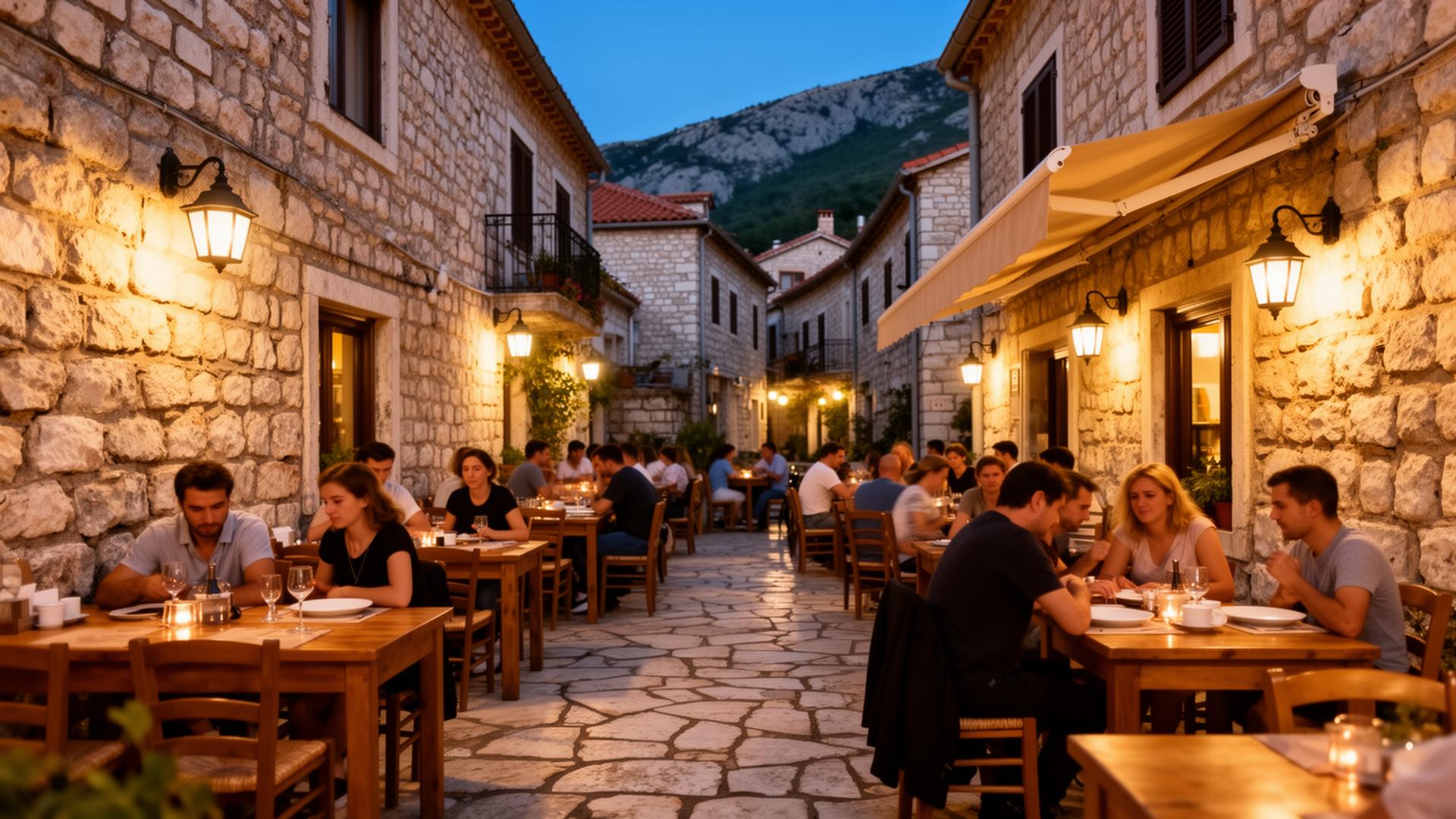
Pod Volat in Stara Varoš is the most natural first reference for traditional food in Podgorica. Tavern atmosphere, charcoal grill running all day, local crowd at lunch, mixed grill platters that feed two people for €20–€25 with wine. If you only eat one traditional meal in the city, eat it here.
Local tips
Small things that make a big difference.
- Order sač in advance. Most restaurants need 1–3 hours notice. A morning phone call saves the meal.
- Lunch is the main event. Tavernas are fullest between 13:00 and 15:00. Dinner is lighter and more café-driven.
- Skip the photo menus. Restaurants with menus in 8 languages and pictures of every dish are tourist filters. The good places have one menu, in Montenegrin, on a single page.
- Bread is part of the meal. Somun (puffy flatbread) comes warm with grilled meat — do not refuse it.
- Drink local. Vranac with grilled meat, Krstač with fish or kačamak, rakija as a closer. Imported wine is more expensive and rarely better here.
- Carry small cash. Cards work in most restaurants, but markets, bakeries and some tavernas prefer cash. Keep €20–€40 in small notes.
- Coffee culture is serious. One coffee = one hour at the table. Nobody will hurry you, and tipping €0.20–€0.50 is enough.
When to go
Best time to experience the food.
Who it suits
Who this food scene is good for.
- Travelers who want real local food rather than a polished restaurant concept.
- Meat eaters — Podgorica is a grill city before anything else.
- Wine drinkers who haven't yet tried Vranac.
- Budget-conscious travelers — a memorable meal still costs €15–€20.
- Slow travelers who enjoy long lunches and aren't on a tight sightseeing schedule.
It is a less obvious fit for travelers chasing Michelin-style fine dining, strict vegan menus, or fast-casual concepts — those exist but are rare and rarely the city's strength.
Nearby
Where to walk after the meal.
Pair lunch with a slow loop of Stara Varoš, the old Ottoman quarter that surrounds Pod Volat. For a longer afternoon, walk down to the Morača river and cross the Millennium Bridge, or continue west to the Gintaš market to see where locals buy what these restaurants cook with. On Sunday mornings, the Cijevna canyon (locally called Niagara Falls) is fifteen minutes east and has two riverside restaurants that serve trout with your feet almost in the water — see the Niagara Falls guide.
FAQ
Traditional food in Podgorica — common questions.
What food is Podgorica known for?+
Grilled meats (ćevapi, pljeskavica, mixed grills), sač cooking, kačamak, kajmak, pršut and breads, usually paired with Montenegrin Vranac red wine or Krstač white.
Is food in Podgorica affordable?+
Yes. A full meal with drinks at a local restaurant typically sits between €12 and €25 per person. Coffee is €1.20–€2.
Where should I start eating in Podgorica?+
Pod Volat in Stara Varoš is the most natural starting point — traditional, local crowd, recognizable name, walking distance from the old town.
What is sač?+
Sač is a slow-cooking technique: meat or vegetables are placed in a shallow pan, covered with a heavy metal bell (sač) and buried under embers. Cooking takes 1–3 hours and most restaurants ask you to order it in advance.
What is the difference between ćevapi and pljeskavica?+
Ćevapi are small grilled minced-meat fingers served in groups of 5–10; pljeskavica is the same meat mixture shaped into a single large patty. Both come with onion, kajmak and somun bread.
What should I drink with Montenegrin food?+
Vranac is the iconic local red — full-bodied, goes with grilled meat. Krstač is the local white. For aperitif, ask for rakija (loza or kruna). Local beer is Nikšićko.
Is Montenegrin food vegetarian-friendly?+
Grills dominate, but most traditional menus include kačamak with cheese, cicvara, fresh salads, ajvar, kajmak, grilled vegetables and bean dishes (pasulj). Vegan options are still limited outside the centre.
Are tips expected at restaurants?+
Tipping is not mandatory. Rounding up or leaving 5–10% for good service is appreciated and standard among locals who eat out regularly.
What is the best time of day to eat traditional food?+
Lunch (13:00–15:00) is the main meal — that is when traditional tavernas are at full rhythm. Dinner is usually lighter and later (20:00–22:00).
Continue